Residential properties across Shelby County experience severe parasite pressures due to prolonged sub-tropical heat, elevated humidity, and sprawling tree canopies. Parasites flourish in damp perimeter soil where…
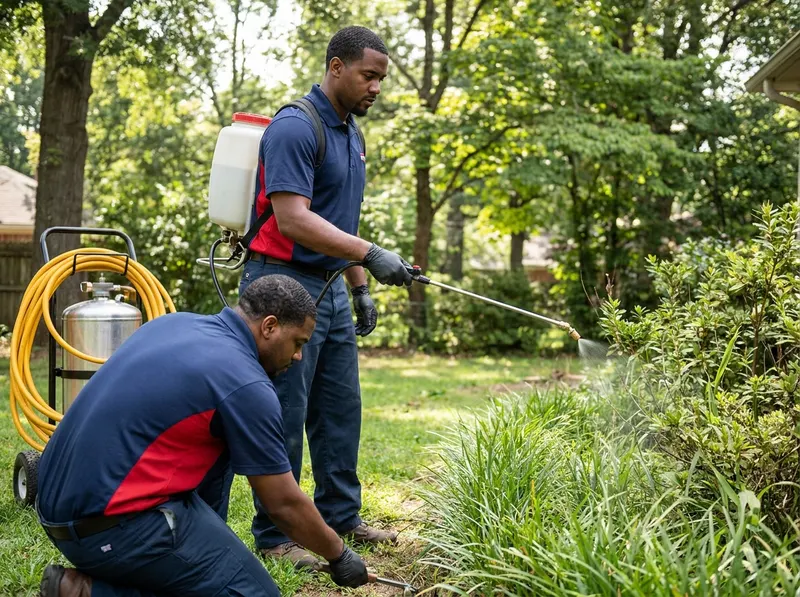
Residential properties across Shelby County experience severe parasite pressures due to prolonged sub-tropical heat, elevated humidity, and sprawling tree canopies. Parasites flourish in damp perimeter soil where domestic pets and suburban wildlife encounter leaf matter. Effective remediation requires breaking the vector chain established by the Centers for Disease Control and Prevention tick surveillance framework. In historic areas like Central Gardens, Midtown, and Cooper-Young, dense older oak canopies preserve soil moisture, creating resting reserves for larval stages. Properties bordering urban green spaces near Shelby Farms Park and Overton Park face constant reintroduction from wild hosts, including raccoons, squirrels, and feral animals. Standard retail aerosol sprays degrade rapidly when exposed to midday UV rays and fail to neutralize non-feeding pupal cocoons tucked within ground cover. Professional decontamination addresses this persistence problem by distributing specialized pyrethroid-based microencapsulations alongside synthetic insect growth regulators across turf, shaded fence lines, and low shrubbery.
Outdoor treatment protocols balance intensive parasite eradication with careful domestic safety standards. BlueHearth Insect Removal applies formulations regulated under the EPA pesticide program to target outdoor harborage points while protecting soil vitality and residential structures. Technicians isolate applications to shaded vertical surfaces, mulched landscape beds, and dog runs where parasites aggregate, avoiding non-target pollinator forage blooms as advised by the NC State Extension Entomology research guides. This focused methodology avoids the hazards of uncontrolled chemical drenching, safeguarding domestic animals and young children once treated surfaces air-dry. The trade-off between broad-spectrum liquid treatments and targeted microencapsulation lies in chemical residual longevity: microencapsulated suspensions adhere to vegetation blades without washing into groundwater during heavy southern rainfall, ensuring active residual suppression for up to 30 to 45 days.
Ground cover management operates in tandem with professional applications. Homeowners in East Memphis, High Point Terrace, and Binghampton dealing with thick zoysia or Bermuda grass turf can reduce tick shelter by maintaining grass heights below 3 inches, following best cultural practices cataloged by the University of Tennessee Institute of Agriculture. In northern neighborhoods such as Frayser, Raleigh, and Berclair, as well as Whitehaven near the Mississippi border, unpaved drainage ditches and perimeter woodpiles foster localized flea clusters. Treating these conditions requires a dual-phase delivery: water-activated cedar or botanical granules penetrate thick thatch layers to halt larval progression, while targeted liquid barriers coat low-hanging vegetation up to 24 inches off the ground where questing ticks wait for passing hosts, according to the Purdue Extension public health guidelines.
Property recovery follows three distinct operational phases. First, technicians map exterior microclimates, flagging heavy moisture zones, dense shrub perimeters, and animal bedding zones. Second, crews apply microencapsulated insecticides and juvenile hormone mimics using calibrated power misting equipment to ensure uniform droplet spread across shaded vegetation, matching application safety thresholds established by the Office of Indiana State Chemist and national pesticide safety standards. Third, granular juvenile-stage arrestors are embedded into thick mulch and compost layers to neutralize emergence cycles. Pet owners must coordinate this application with topical or oral companion-animal veterinary care governed by the FDA Center for Veterinary Medicine and environmental vector monitoring from the Tennessee Department of Health. This integrated methodology provides swift, measurable exterior relief without binding families to restrictive multi-season service obligations.
Every job gets a firm, written price after a free on-site visit.
Tell us about your flea & tick yard decontamination job in Memphis and we'll send a clear, written quote, usually the same day.
 BlueHearth Insect Removal