Subterranean termite treatment in Memphis targets the eastern subterranean termite, an insect that nests deep in Shelby County soil and requires constant ground moisture. In historic brick-and-mortar crawlspaces across…
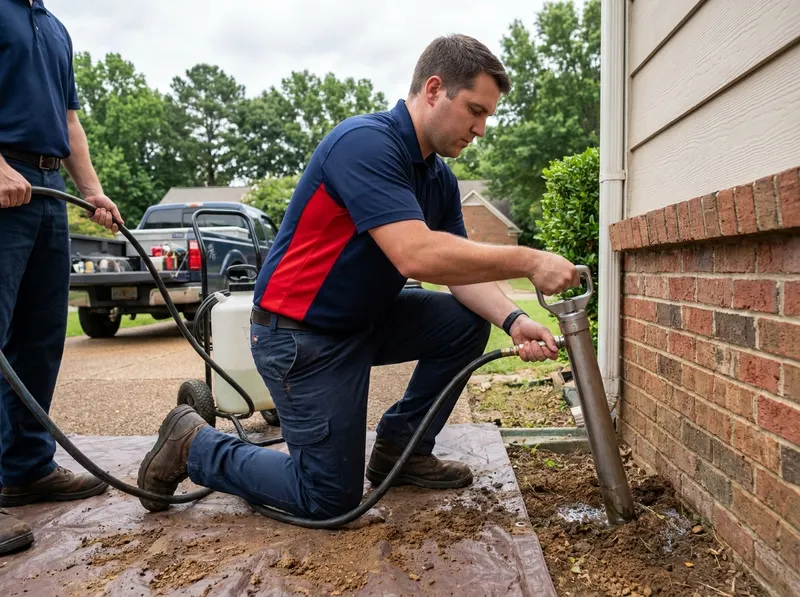
Subterranean termite treatment in Memphis targets the eastern subterranean termite, an insect that nests deep in Shelby County soil and requires constant ground moisture. In historic brick-and-mortar crawlspaces across Midtown and Central Gardens, colonies build mud exploratory tubes across masonry piers to access sill plates and floor joists. Conventional consumer aerosol sprays merely kill foraging workers on contact, leaving the queen and hundreds of thousands of nestmates unaffected underground. BlueHearth Insect Removal applies non-repellent liquid barriers containing fipronil, which termites pass through undetected. This allows the chemistry to transfer across the colony via social grooming before halting cellulose digestion, eliminating the subterranean nest entirely without dispersing toxic chemical fumes through living areas.
Structure type determines whether liquid trenching or targeted perimeter baiting provides the appropriate defensive envelope. In older raised foundations common to Cooper-Young and High Point Terrace, technicians trench 6 inches wide by 6 inches deep along interior and exterior foundation walls, applying 4 gallons of termiticide per 10 linear feet according to standards outlined by the EPA Safe Pest Control program. For modern monolithic slab construction in East Memphis and Raleigh, drilling concrete through expansion joints, patios, and garage aprons creates an uninterrupted protective seal. The trade-off between approaches centers on physical disruption versus immediate continuous protection: liquid barriers provide an instant defensive perimeter at foundation contact points, whereas subterranean bait stations involve zero concrete drilling but require 60 to 90 days of colony feeding monitoring to confirm total structural protection.
Subterranean termite pressure escalates sharply across river valley regions due to high alluvial moisture and dense tree canopies near landmarks like Overton Park and Shelby Farms Park. In neighborhoods such as Binghampton, Berclair, and Whitehaven, sandy loam soil types enable rapid mud tube construction during damp spring seasons. The Tennessee Department of Agriculture oversees regulatory application rates to prevent chemical migration into urban groundwater tables. BlueHearth Insect Removal prioritizes low-toxicity, family-conscious application techniques that bind tightly to soil particles, preventing leaching into residential yard zones where children and pets play.
Effective subterranean termite remediation pairs chemical boundary defenses with physical moisture reduction around the slab edge. Subterranean workers cannot survive ambient air with low relative humidity, making damp crawlspaces and blocked foundation vents prime entry targets. Following building guidelines from the U.S. Department of Housing and Urban Development and timber performance research from the USDA Forest Products Laboratory, structural preservation requires maintaining at least 6 inches of clearance between bare soil and exterior siding. Guidance from the University of Tennessee Extension, pest research documented by the Entomological Society of America, and materials standards from the ASTM International demonstrate that pairing proper gutter discharge with non-repellent termiticides delivers lasting protection without requiring homeowners to commit to mandatory multi-year service agreements upfront.
Every job gets a firm, written price after a free on-site visit.
Tell us about your subterranean termite treatment job in Memphis and we'll send a clear, written quote, usually the same day.
 BlueHearth Insect Removal